
Valorization of fishery by-products for feeding shrimp
Project leader: Maritime cooperative of Azurean fishers and the Paul Ricard Oceanographic Institute
Action sheet: FA 1 – Promote sustainable development of the blue economy sector within the Côte d’Azur Fisheries Local Action Group territory
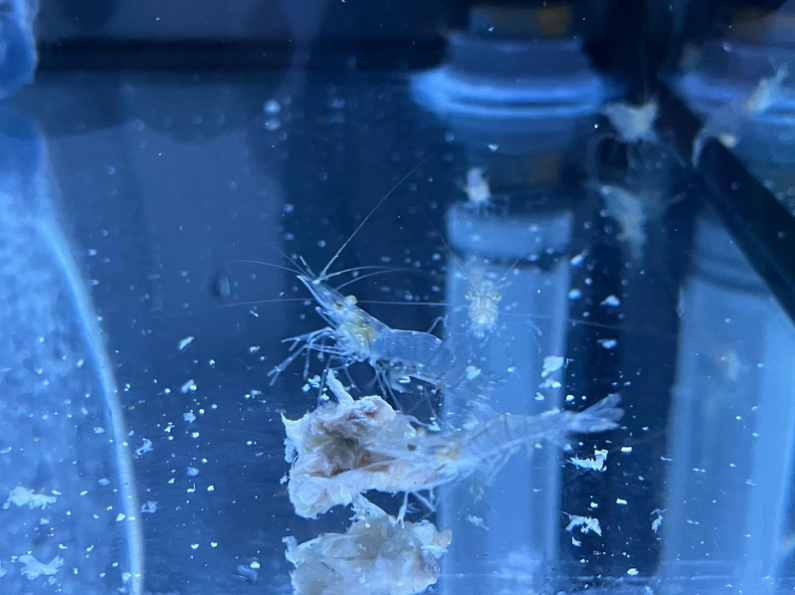
Processing seafood products involves complex, costly and energy-intensive storage, collection and treatment processes that result in significant material losses. Based on this observation, the Maritime Cooperative of Azurean fishers and the Paul Ricard Oceanographic Institute sought to optimize the collection of organic materials at a lower cost. One promising lead is the development of a local farming industry based on co-products that are not used in the processing of fishery resources. The project aims to test the feasibility of a growth cycle for P. serratus shrimp using these by-products.
This project aims to create an innovative, sustainable and local cycle that addresses the challenges of the blue bioeconomy, decarbonisation and the reduction of fishing waste by promoting the recycling of unused raw materials (heads, shells, bones and residual flesh).
Project schedule :
Phase 1: T2 2025
- Identification of available co-products and their volume
- Preliminary discussions with the DDPP regarding status, authorisation and health precautions
- Preparation of breeding infrastructure and experimental protocol
Phase 2: T4 2025
- Launch of feeding tests on several batches of shrimp
- Biological and health monitoring over 16–20 weeks
- Data collection and behavioural observations
Phase 3: T1 2026
- Processing and interpreting results
- Drafting a scientific and regulatory report
- Technical meeting with institutional and socio-professional partners
- Feasibility study for scaling up or duplicating the model
Expected results :
- Reduction of organic waste and recovery of by-products to contribute to a circular economy.
- Improved knowledge about alternative nutrition for local coastal species.
- Clarification of the legal status of marine co-products (food, waste and by-products) to support stakeholders in achieving compliance.
- Reduction of treatment costs and diversification of activities to structure a new micro-sector.
- Creation of a network of coastal stakeholders committed to sustainability (scientists, professionals and local authorities).
Project cost:
Total cost: € 87,910
EMFAF co-financing: €35,164
Région Sud co-financing : €35,164